Build your gen AI–based text-to-SQL application using RAG, powered by Amazon Bedrock (Claude 3 Sonnet and Amazon Titan for embedding)
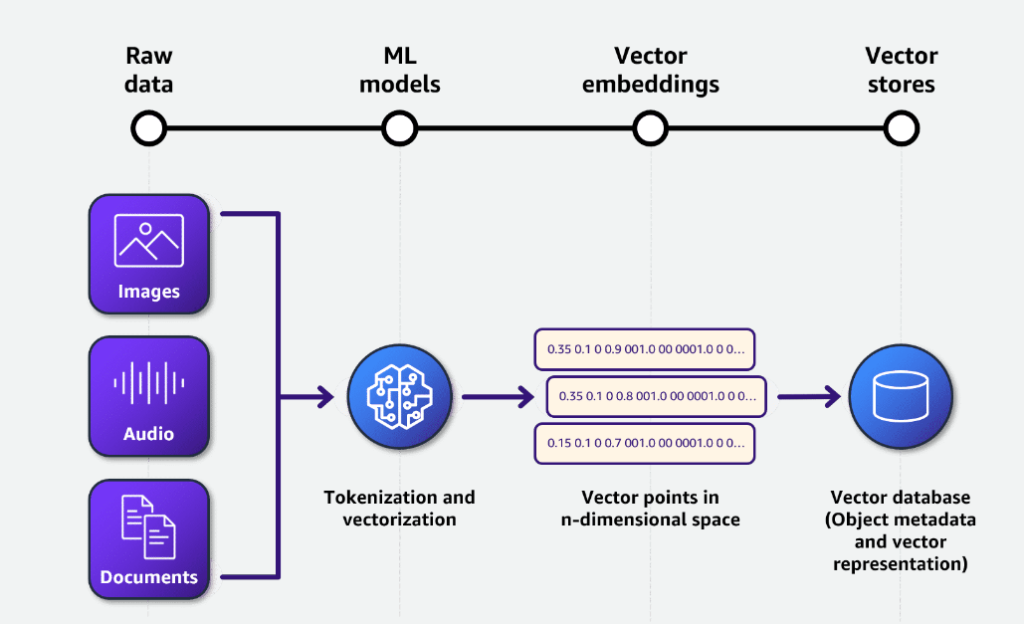
SQL is one of the key languages widely used across businesses, and it requires an understanding of databases and table metadata. This can be overwhelming for nontechnical users who lack proficiency in SQL. Today, generative AI can help bridge this knowledge gap for nontechnical users to generate SQL queries by using a text-to-SQL application. This […]
Unleash AI innovation with Amazon SageMaker HyperPod
The rise of generative AI has significantly increased the complexity of building, training, and deploying machine learning (ML) models. It now demands deep expertise, access to vast datasets, and the management of extensive compute clusters. Customers also face the challenges of writing specialized code for distributed training, continuously optimizing models, addressing hardware issues, and keeping […]
Revolutionizing clinical trials with the power of voice and AI
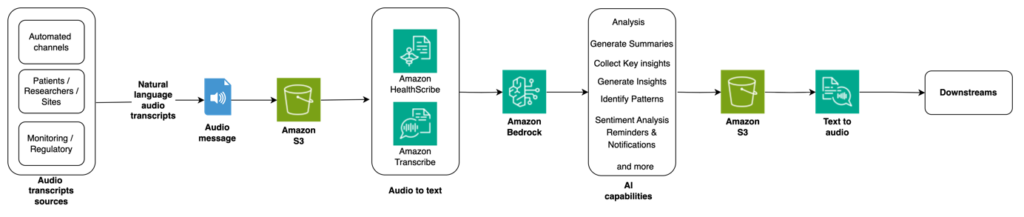
In the rapidly evolving healthcare landscape, patients often find themselves navigating a maze of complex medical information, seeking answers to their questions and concerns. However, accessing accurate and comprehensible information can be a daunting task, leading to confusion and frustration. This is where the integration of cutting-edge technologies, such as audio-to-text translation and large language […]
Intelligent healthcare assistants: Empowering stakeholders with personalized support and data-driven insights
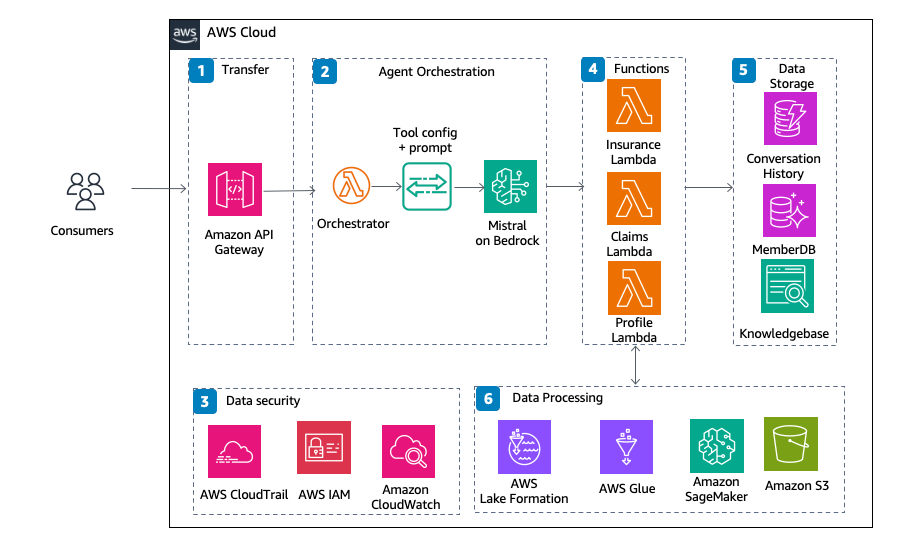
Large language models (LLMs) have revolutionized the field of natural language processing, enabling machines to understand and generate human-like text with remarkable accuracy. However, despite their impressive language capabilities, LLMs are inherently limited by the data they were trained on. Their knowledge is static and confined to the information they were trained on, which becomes […]
Getting started with computer use in Amazon Bedrock Agents
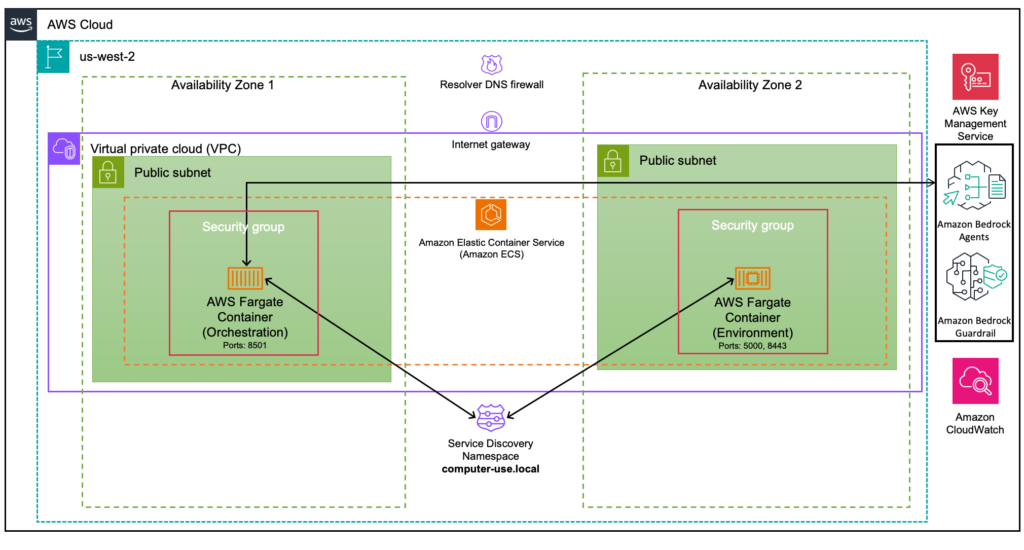
Computer use is a breakthrough capability from Anthropic that allows foundation models (FMs) to visually perceive and interpret digital interfaces. This capability enables Anthropic’s Claude models to identify what’s on a screen, understand the context of UI elements, and recognize actions that should be performed such as clicking buttons, typing text, scrolling, and navigating between […]
Evaluating RAG applications with Amazon Bedrock knowledge base evaluation
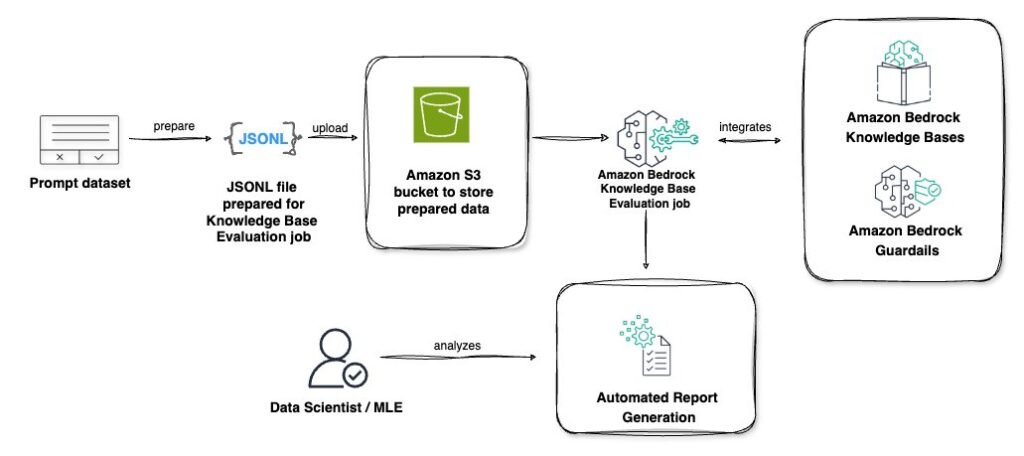
Organizations building and deploying AI applications, particularly those using large language models (LLMs) with Retrieval Augmented Generation (RAG) systems, face a significant challenge: how to evaluate AI outputs effectively throughout the application lifecycle. As these AI technologies become more sophisticated and widely adopted, maintaining consistent quality and performance becomes increasingly complex. Traditional AI evaluation approaches […]
How GoDaddy built a category generation system at scale with batch inference for Amazon Bedrock
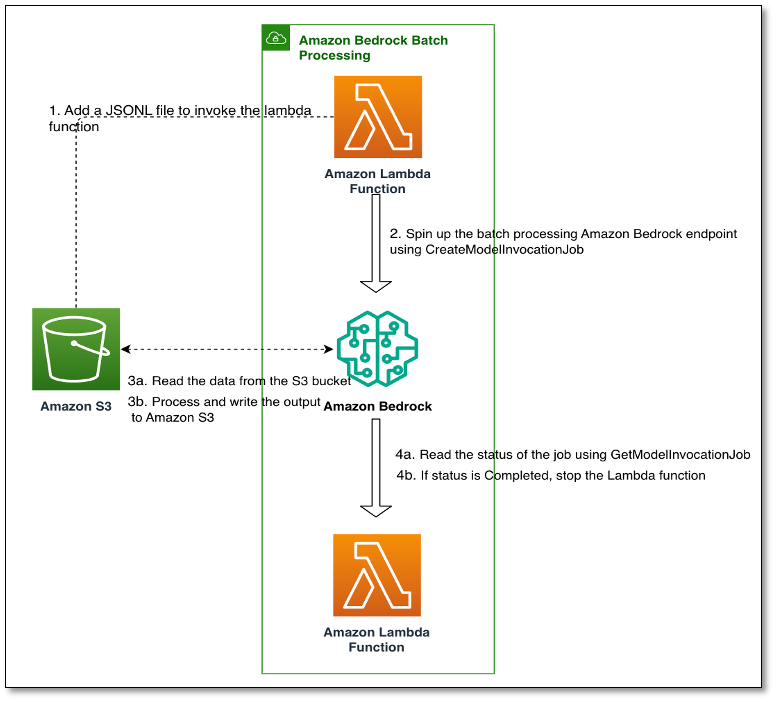
This post was co-written with Vishal Singh, Data Engineering Leader at Data & Analytics team of GoDaddy Generative AI solutions have the potential to transform businesses by boosting productivity and improving customer experiences, and using large language models (LLMs) in these solutions has become increasingly popular. However, inference of LLMs as single model invocations or […]
Benchmarking customized models on Amazon Bedrock using LLMPerf and LiteLLM
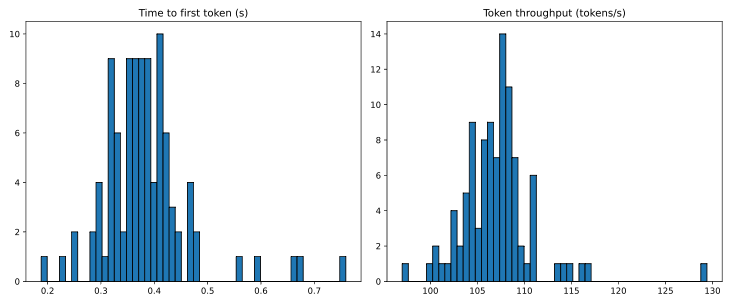
Open foundation models (FMs) allow organizations to build customized AI applications by fine-tuning for their specific domains or tasks, while retaining control over costs and deployments. However, deployment can be a significant portion of the effort, often requiring 30% of project time because engineers must carefully optimize instance types and configure serving parameters through careful […]
Creating asynchronous AI agents with Amazon Bedrock
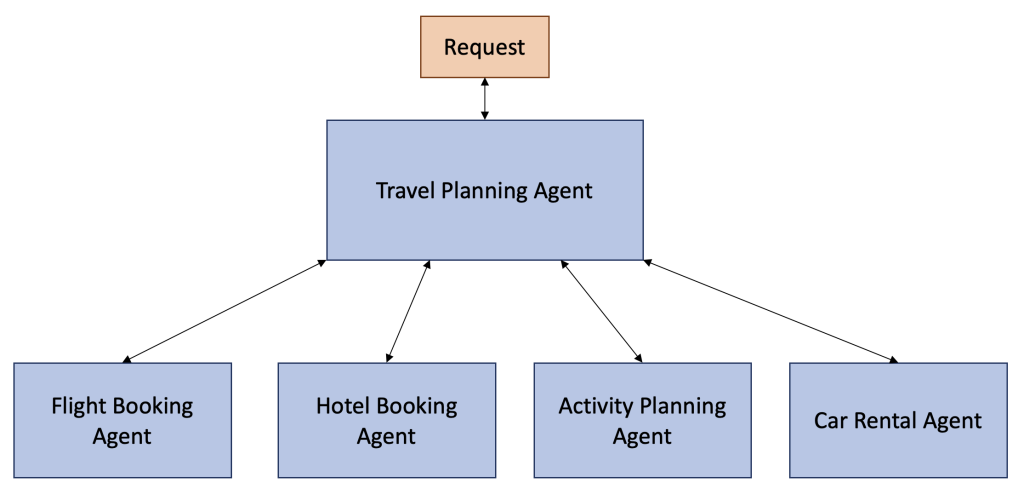
The integration of generative AI agents into business processes is poised to accelerate as organizations recognize the untapped potential of these technologies. Advancements in multimodal artificial intelligence (AI), where agents can understand and generate not just text but also images, audio, and video, will further broaden their applications. This post will discuss agentic AI driven […]
How to run Qwen 2.5 on AWS AI chips using Hugging Face libraries
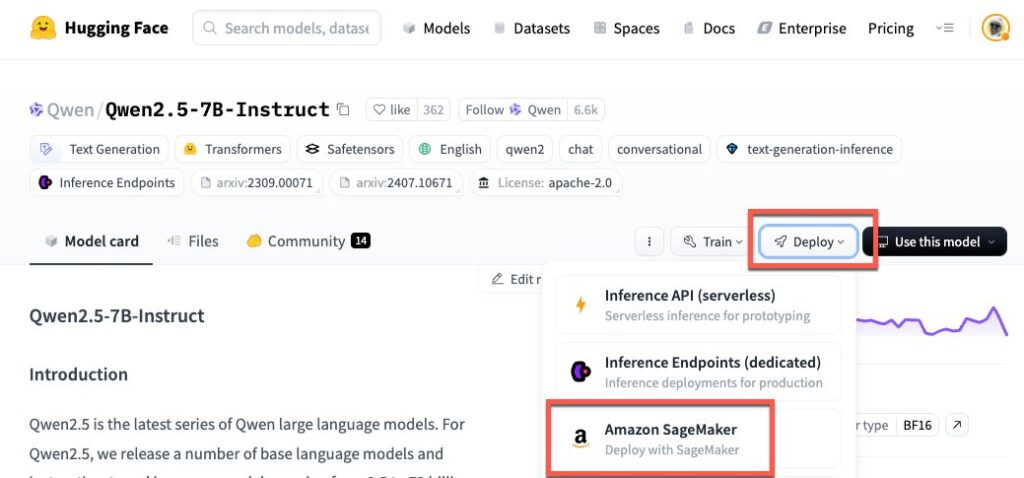
The Qwen 2.5 multilingual large language models (LLMs) are a collection of pre-trained and instruction tuned generative models in 0.5B, 1.5B, 3B, 7B, 14B, 32B, and 72B (text in/text out and code out). The Qwen 2.5 fine tuned text-only models are optimized for multilingual dialogue use cases and outperform both previous generations of Qwen models, and […]