Accelerate generative AI innovation in Canada with Amazon Bedrock cross-Region inference
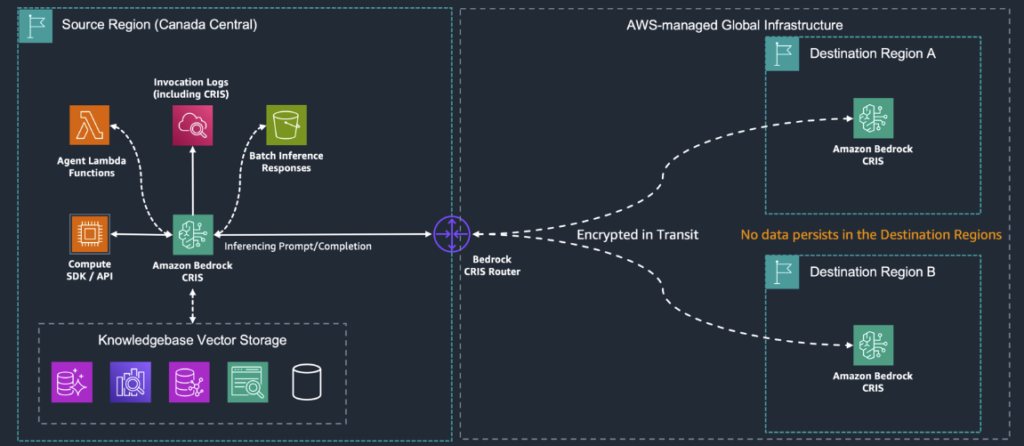
Generative AI has created unprecedented opportunities for Canadian organizations to transform their operations and customer experiences. We are excited to announce that customers in Canada can now access advanced foundation models including Anthropic’s Claude Sonnet 4.5 and Claude Haiku 4.5 on Amazon Bedrock through cross-Region inference (CRIS). This post explores how Canadian organizations can use […]
Power up your ML workflows with interactive IDEs on SageMaker HyperPod
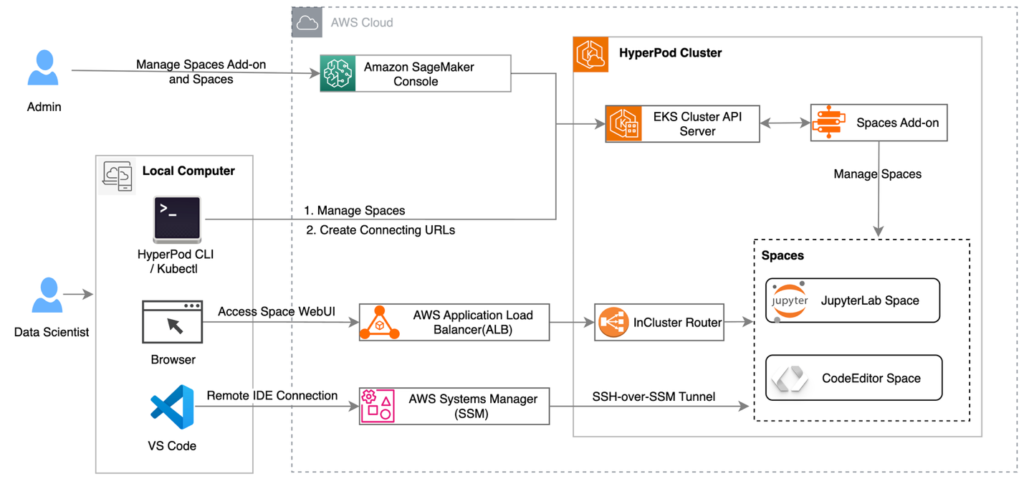
Amazon SageMaker HyperPod clusters with Amazon Elastic Kubernetes Service (EKS) orchestration now support creating and managing interactive development environments such as JupyterLab and open source Visual Studio Code, streamlining the ML development lifecycle by providing managed environments for familiar tools to data scientists. This feature introduces a new add-on called Amazon SageMaker Spaces for AI developers to create and […]
Claude Opus 4.5 now in Amazon Bedrock
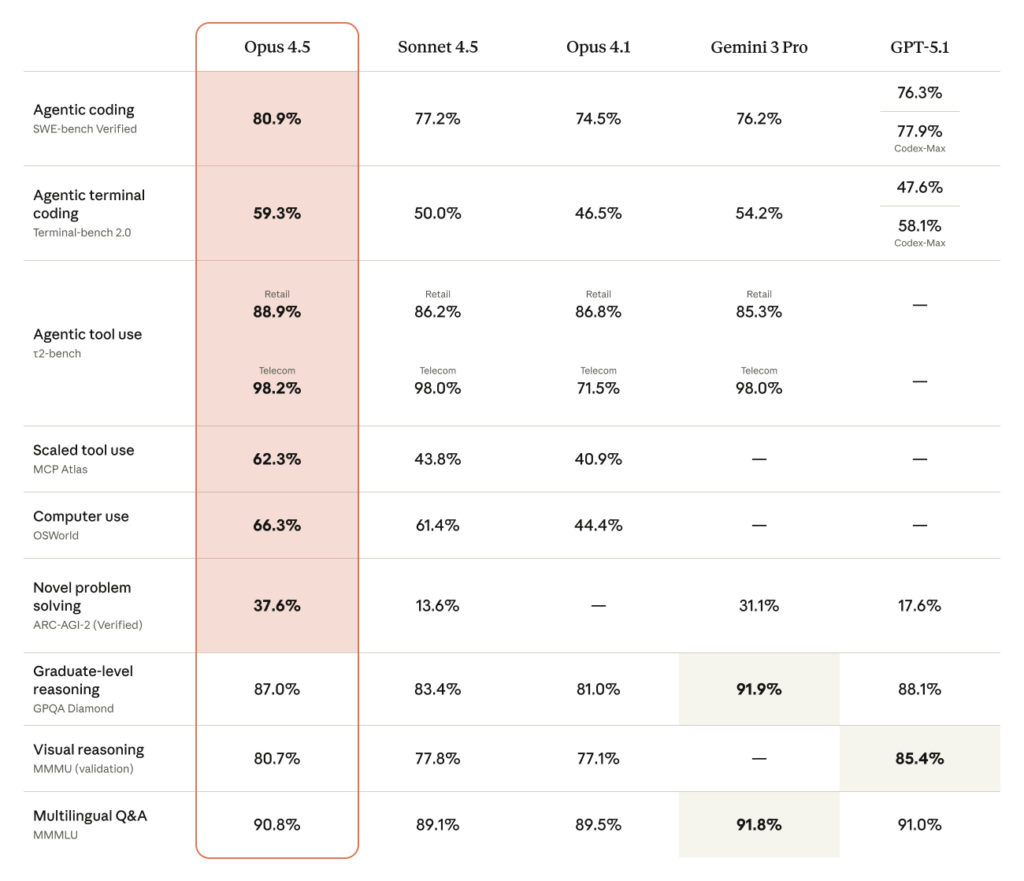
Anthropic’s newest foundation model, Claude Opus 4.5, is now available in Amazon Bedrock, a fully managed service that offers a choice of high-performing foundation models from leading AI companies. Opus 4.5 is a meaningful step forward in what AI systems can do and sets a new standard across coding, agents, computer use, and office tasks. […]
Deploy GPT-OSS models with Amazon Bedrock Custom Model Import
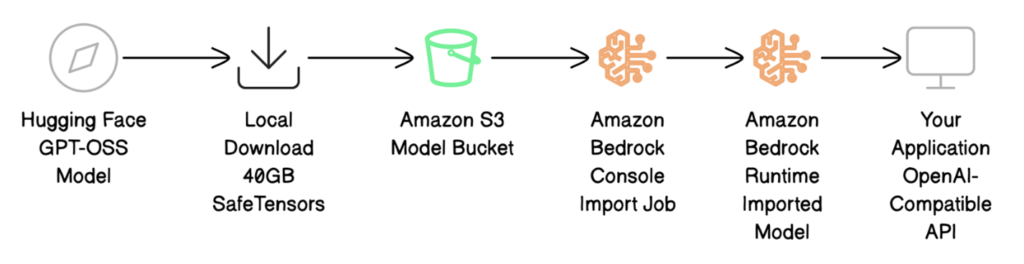
Amazon Bedrock Custom Model Import now supports OpenAI models with open weights, including GPT-OSS variants with 20-billion and 120-billion parameters. GPT-OSS models offer reasoning capabilities and can be used with OpenAI Chat Completions API. By preserving full OpenAI API compatibility, organizations can migrate their existing applications to AWS, gaining enterprise-grade security, scaling, and cost control. […]
Streamline AI operations with the Multi-Provider Generative AI Gateway reference architecture
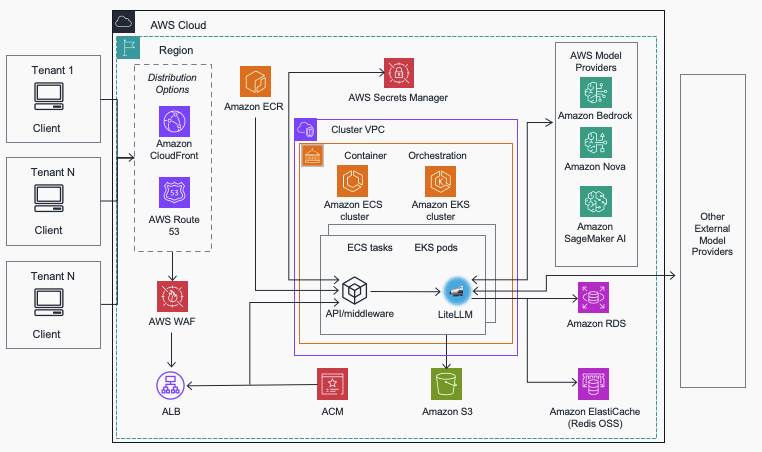
As organizations increasingly adopt AI capabilities across their applications, the need for centralized management, security, and cost control of AI model access is a required step in scaling AI solutions. The Generative AI Gateway on AWS guidance addresses these challenges by providing guidance for a unified gateway that supports multiple AI providers while offering comprehensive […]
Deploy geospatial agents with Foursquare Spatial H3 Hub and Amazon SageMaker AI

Organizations have used geospatial machine learning (ML) for property risk assessment, disaster response, and infrastructure planning. These systems worked well but couldn’t scale beyond specialized use cases. Each question required multiple geospatial datasets, each with its own model and often its own workflow, limiting these capabilities to a handful of high-value use cases at the […]
How Wipro PARI accelerates PLC code generation using Amazon Bedrock
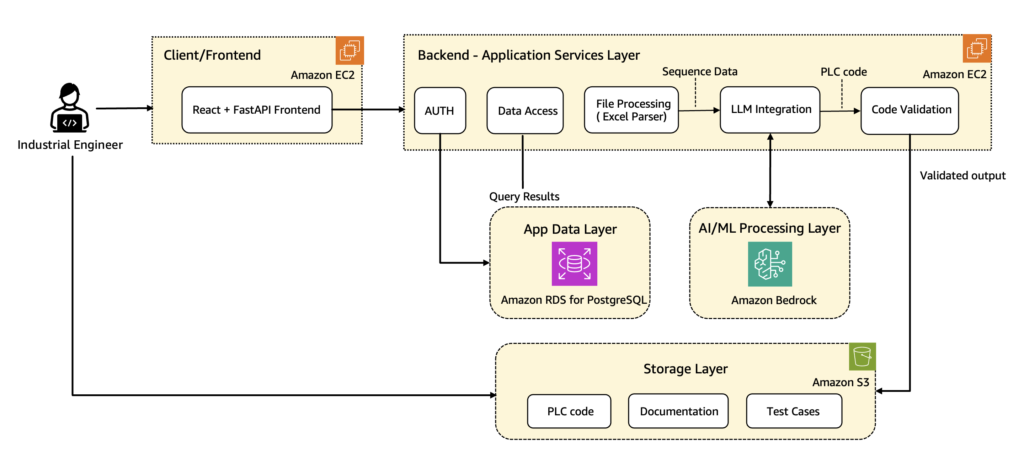
This post is co-written with Rejin Surendran from Wipro Enterprises Limited and Bakrudeen K from ShellKode. In manufacturing environments, industrial automation engineers face a significant challenge: how to rapidly convert complex process requirements into Programmable Logic Controller (PLC) ladder text code. This traditional, manual process typically requires 3-4 days per query, creating bottlenecks in production […]
MSD explores applying generative Al to improve the deviation management process using AWS services
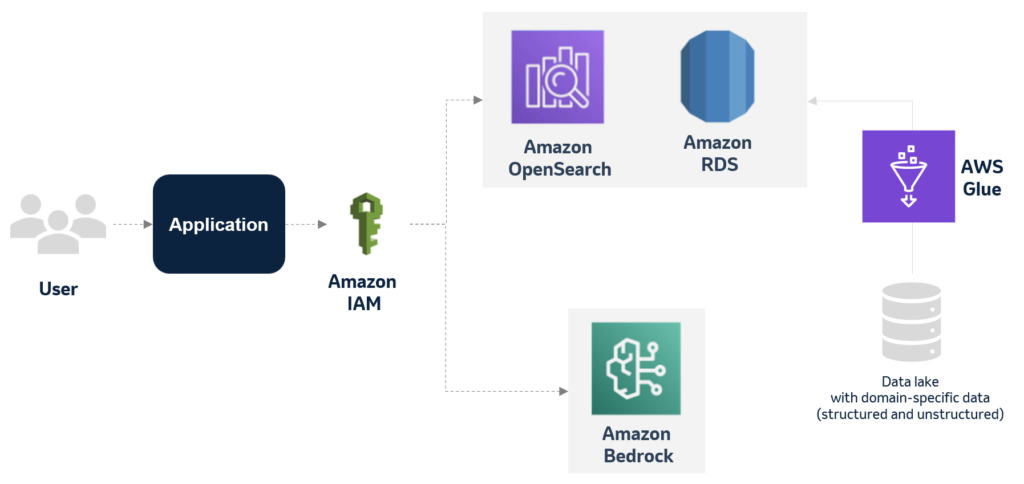
This post is co-written with Hossein Salami and Jwalant Vyas from MSD. In the biopharmaceutical industry, deviations in the manufacturing process are rigorously addressed. Each deviation is thoroughly documented, and its various aspects and potential impacts are closely examined to help ensure drug product quality, patient safety, and compliance. For leading pharmaceutical companies, managing these […]
Accelerating genomics variant interpretation with AWS HealthOmics and Amazon Bedrock AgentCore

Genomic research stands at a transformative crossroads where the exponential growth of sequencing data demands equally sophisticated analytical capabilities. According to the 1000 Genomes Project, a typical human genome differs from the reference at 4.1–5.0 million sites, with most variants being SNPs and short indels. These variants, when aggregated across individuals, contribute to differences in […]
How Rufus scales conversational shopping experiences to millions of Amazon customers with Amazon Bedrock
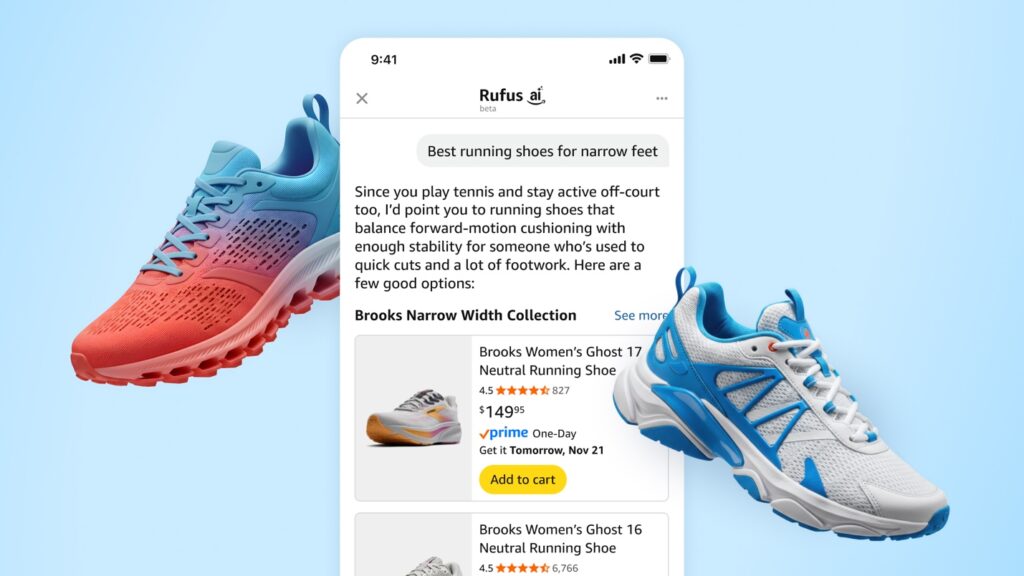
Our team at Amazon builds Rufus, an AI-powered shopping assistant which delivers intelligent, conversational experiences to delight our customers. More than 250 million customers have used Rufus this year. Monthly users are up 140% YoY and interactions are up 210% YoY. Additionally, customers that use Rufus during a shopping journey are 60% more likely to […]